


-
What Grade is My Ankle Sprain?
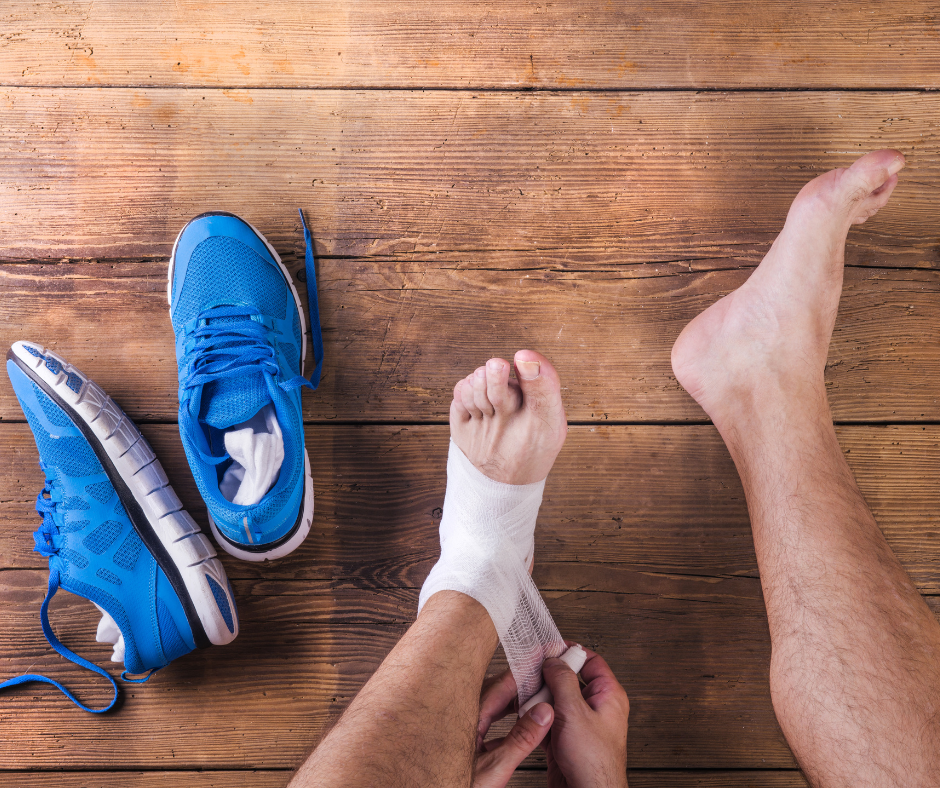
(The Post-Injury Action Guide)
A sprain is a ligament tear, a rip in the tough, rubber-band-like tissues that connect your bones and keep your joints stable. When you roll your ankle, you stretch those bands beyond their limit. And contrary to popular belief, it might not heal with rest alone.
To ensure proper recovery and prevent long-term issues, it’s important to determine the grade of the sprain.If you are trying to figure out your next move, Kentlands Foot & Ankle Center is here to help. The guide below can help you match symptoms to your sprain degree…and learn when it’s time to visit a podiatrist!
Grade 1: The Mild Sprain (Micro-Tears)
Medical professionals categorize sprains using three distinct categories. Of those, a “Grade 1” is the kind you’re likely familiar with. Essentially, you stretched the “rubber band” too far, creating microscopic tears in the ligament fibers. The ligament itself remains fully intact.
- The Identifiers: You have mild swelling and tenderness. You rarely see deep purple bruising at this stage. The joint still feels mechanically stable, and you can walk with only mild discomfort.
- ✅ DO: Apply the R.I.C.E. method (Rest, Ice, Compression, Elevation) immediately. Wear a supportive lace-up shoe if you need to walk.
- 🛑 DON’T: Do not jump right back into high-impact sports (like running or basketball) tomorrow. Give the micro-tears a few days to heal, or they will quickly become a Grade 2 tear.
Grade 2: The Moderate Sprain (Partial Tear)
This is the tricky middle ground. You tore a significant portion of the ligament, but it is not completely severed.
- The Identifiers: Noticeable swelling appears within the first hour. Bruising (black, blue, or yellow) will likely creep along the side of your foot or heel over the next 24 hours. The ankle feels “loose,” and walking is painful. You will likely walk with a pronounced limp.
- ✅ DO: Switch to a rigid brace or a walking boot. The partial tear needs complete immobilization to knit back together tightly. Schedule a podiatry appointment for an X-ray to rule out bone chips.
- 🛑 DON’T: Do not try to “walk it off.” If you walk on a partially torn ligament without a brace, it will heal loosely. This leads to Chronic Ankle Instability, a lifelong condition where your ankle constantly gives way on flat ground.
Grade 3: The Severe Sprain (Complete Rupture)
The rubber band has snapped. You have completely torn the ligament away from the bone or severed it in half.
- The Identifiers: You likely heard an audible “pop” or “snap” at the moment of injury. Massive swelling (the “balloon” effect) occurs instantly. Severe, dark bruising follows quickly. You can’t bear weight on your foot without excruciating pain.
- ✅ DO: Seek medical attention immediately. You need professional imaging. Elevate the leg above your heart to slow the rapid fluid buildup.
- 🛑 DON’T: Do not assume it is “just a sprain.” The symptoms of a Grade 3 sprain are virtually identical to those of a broken ankle. Do NOT attempt to pop or twist the ankle back into place!
Stop Guessing. Get a Diagnosis.
The biggest mistake athletes make is misdiagnosing a Grade 2 sprain as a Grade 1, returning to activity too early, and permanently ruining their joint stability.
The only way to know definitively what degree of sprain you suffered (and to rule out a fracture) is through professional imaging and a clinical exam!
Still have questions? Get in touch for a comprehensive foot examination with Kentlands Foot & Ankle Center podiatrist Dr. Jon M. Sherman. To make your appointment, please call our office at 301-825-9697. You can also contact us online.
RECENT POSTS
categories
- Uncategorized
- Featured Articles
- Foot Disorders
- Broken Ankle
- Broken Toe
- Fracture
- Foot Health
- Foot Care
- Arthritis
- Foot Pain
- Skin Cancer
- Podiatry Appointment
- Custom Orthotics
- Podiatrist
- Diabetes
- Gout
- Heart Health
- National Nutrition Month
- National Foot Health Awareness Month
- Foot Safety
- Foot and Ankle Injuries
- Falls Prevention
- Chronic Heel Pain
- Shoes
- Laser Therapy
- Quoted
- Physical Therapy
- KeryFlex
- Sweat
- Summer Foot Care
- Sports Injury
- ESWT
- Fungal Toenails
- Bunion
- Plantar Fasciitis
- PinPointe Laser
- Heel Pain
- walking